
Visitors at the San Diego Zoo are getting an exciting first look at a pair of rare Amur leopard cubs born on April 26, 2020.
These twin cubs are exploring their outdoor habitat with their mother, Satka. The birth of these cubs is particularly significant, as fewer than 100 Amur leopards are believed to remain in their natural habitats across Russia and China.
If you prefer not to read the full story,
Skip ahead to watch the video ->
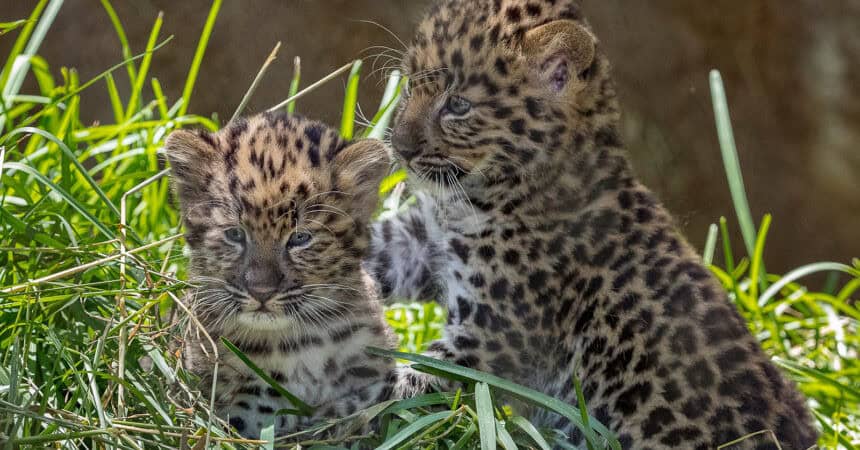
After spending most of their early days in an indoor enclosure with Satka, the cubs began emerging from their den at around 20 days old.
About ten days later, they ventured into the outdoor habitat for the first time. Now, they are exploring the space daily, under the watchful eye of their mother.
Satka, the mother, demonstrates her instincts by closely watching the habitat to protect her cubs from potential threats. The cubs, in turn, are already displaying natural behaviors like stalking and climbing.
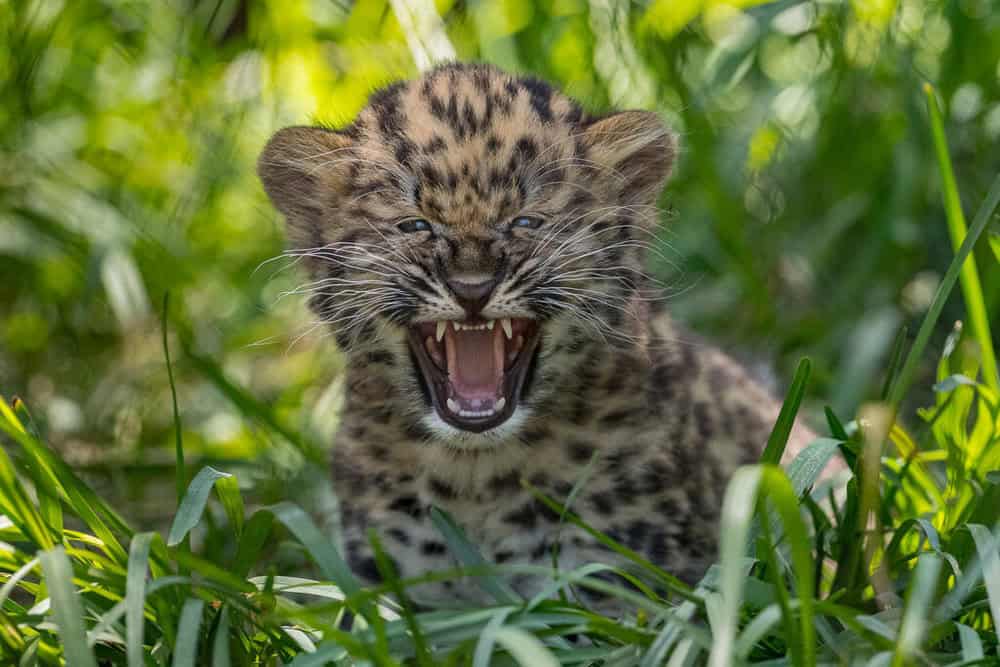
Wildlife care specialists even observed one of the cubs climbing about four feet up a tree before Satka gently brought them back to the ground.
“The cubs are climbing up on the rocks, getting into the trees, sometimes listening to mom and sometimes not,” said Kelly Murphy, a senior wildlife care specialist at the San Diego Zoo. “Their personalities are still developing, and I look forward to seeing what they become.”
The cubs, who have not yet been named, are scheduled for their first veterinary exam this week, where their sex will be determined. This is Satka’s second set of cubs, which are being raised in the leopard habitat at Africa Rocks.
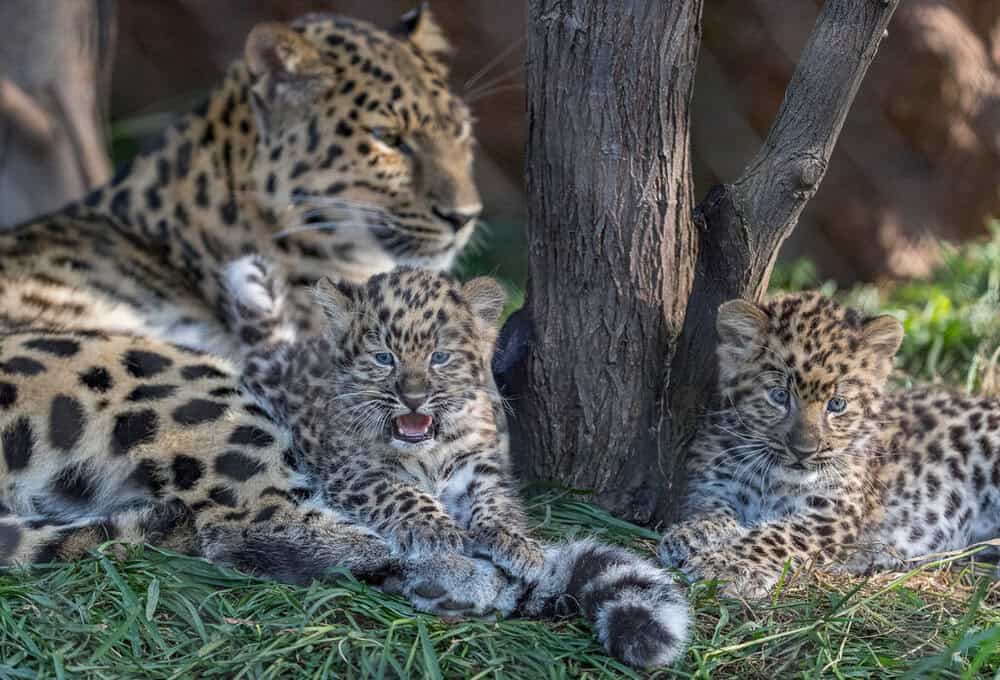
Though Amur leopards are not native to Africa, Satka and her mate, Oskar, were moved to this habitat to have a dedicated breeding space.
Amur leopards are among the rarest big cats in the world. Historically, they were found across northeastern China, Russia, and the Korean Peninsula, but their populations have dramatically declined due to habitat loss and poaching for their distinctive spotted fur.
It is estimated that as few as 85 Amur leopards are in their original habitat in the Primorye region of the Russian Far East.
San Diego Zoo Global and other zoological organizations worldwide are committed to conserving this endangered species.
Through the Global Species Management Program (GSMP), over 94 institutions are working together to increase the global population of Amur leopards, caring for more than 220 individuals.
San Diego Zoo Global’s broader conservation efforts aim to bring species back from the brink of extinction.
Their work encompasses onsite wildlife conservation at the San Diego Zoo, San Diego Zoo Safari Park, and the San Diego Zoo Institute for Conservation Research, as well as international field programs across six continents.
These efforts reach over 1 billion people annually through various media, with the help of dedicated donors.
Watch the video below:
Read more Wildlife News.