
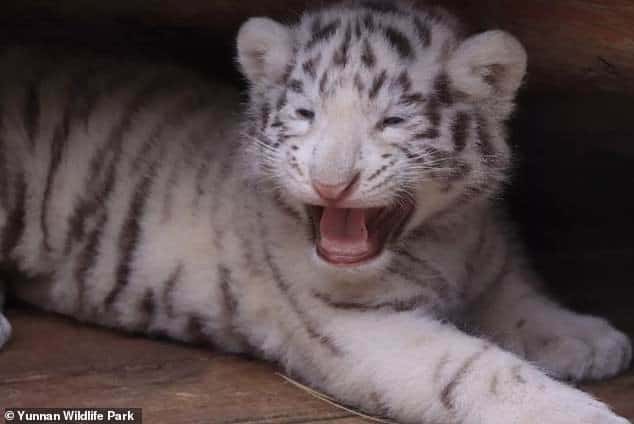
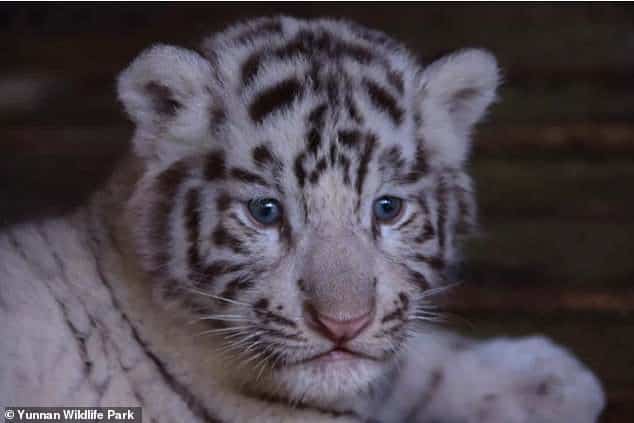
Three white tiger triplets have debuted at Yunnan Wildlife Park in Kunming city, southwest China, captivating visitors with playful antics.
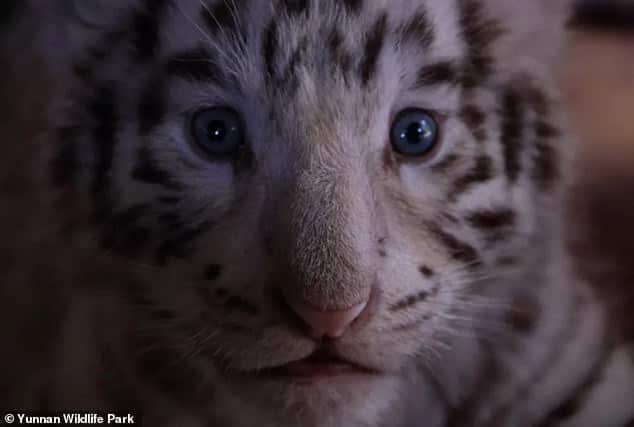
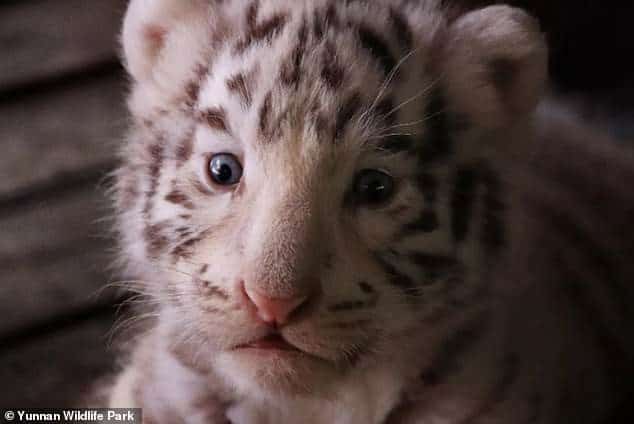
These blue-eyed Bengal tiger cubs, born two-and-a-half months ago, are part of the park’s ongoing efforts to conserve this rare and majestic species.
If you prefer not to read the full story,
Skip ahead to watch the video ->
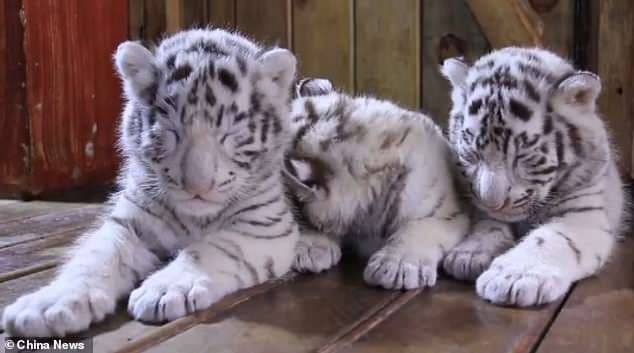
The public appearance of these adorable cubs, with their distinctive black stripes and white coats, has created a buzz of excitement.
Adding to the festivities, a competition is underway to name these charming triplets, drawing even more attention to their debut during China’s national holiday celebrations.
Video footage from China News shows the triplets playfully tumbling around their enclosure, occasionally struggling to stay awake during their first public appearance.
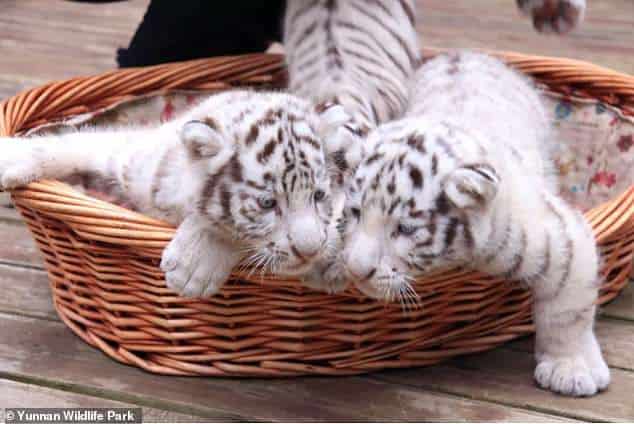
Their energetic behavior adds a delightful touch to their crucial role in contributing to the conservation of white tigers.
These cubs are the latest addition to the white tigers born at the Yunnan Wildlife Park, which welcomed six others last year.
This commitment to preserving the species’ genetic variation underscores the zoo’s dedication to wildlife conservation. The cubs’ journey, however, was not without its challenges.
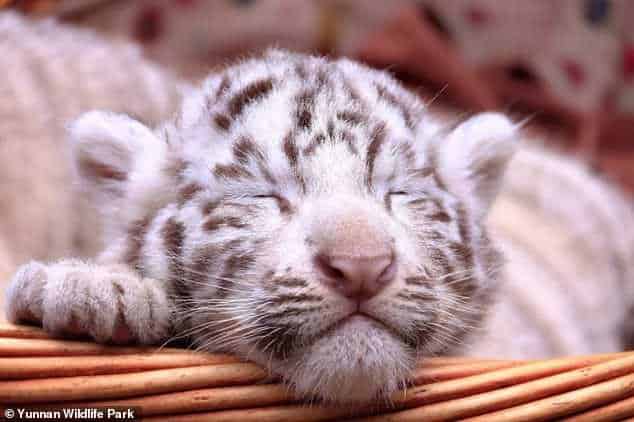
Their inexperienced mother faced difficulties nursing them, but the breeders’ dedicated care ensured the health and well-being of the triplets.
The Yunnan Wildlife Park expressed its pride in the cubs’ progress, noting that after two-and-a-half months of care, they are in good health and capable of simple interactions with visitors.
White tigers are a rare genetic variation of the orange Bengal tiger, requiring both parents to carry a unique gene that manifests once in about 10,000 births.
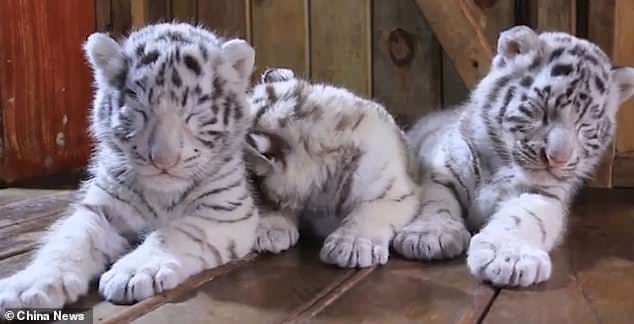
With only about 250 white tigers in captivity worldwide, their rarity adds to their allure and importance in conservation efforts.
The white tiger triplets’ debut is an adorable spectacle and a beacon of hope in the ongoing effort to preserve these magnificent creatures.
Despite their scarcity, their birth reminds us of the importance of conserving these rare animals, whose populations have dwindled due to poaching, deforestation, and the depletion of their natural prey.
Watch the video below:
Read more Wildlife News.