
Bloodstains on a poacher’s shirt helped connect him to three rhinos killed in South Africa’s Kruger National Park, contributing to an effective 30-year prison sentence in a case that demonstrated the power of wildlife forensics.
The sentence was not a new 2026 development. The poaching incident occurred in 2020, and the Skukuza Regional Court imposed the sentence on October 5, 2023. Revisiting the case matters because its evidence trail shows how ranger work, criminal investigation and DNA analysis can combine to hold wildlife criminals accountable.
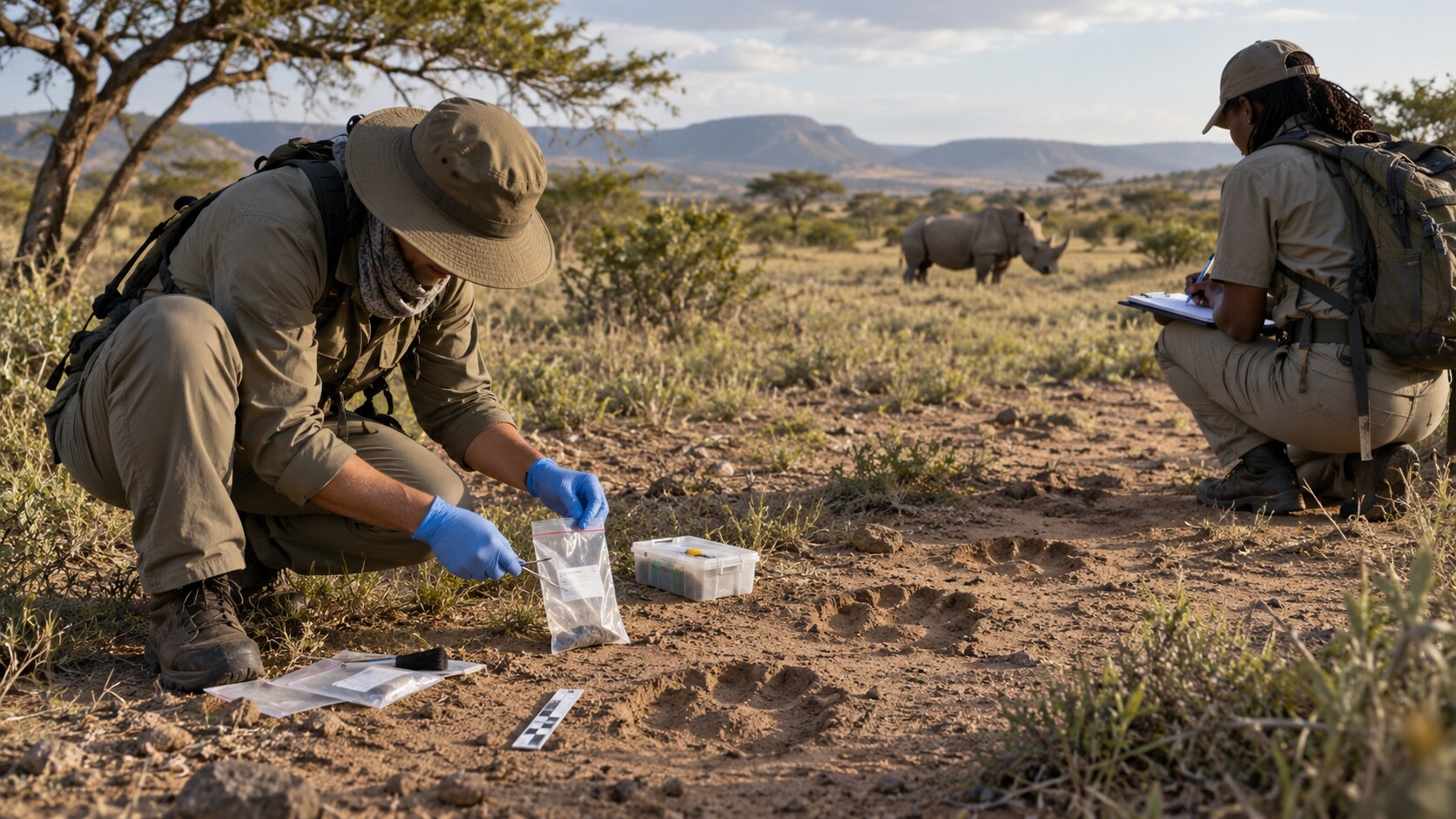
A three-man gang entered Kruger National Park
According to South African National Parks, Sidney Sibuyi was part of a three-man armed group that illegally entered the Stolznek Section of Kruger National Park on September 26, 2020, intending to hunt rhinos.
Field rangers heard gunshots, responded and pursued the group. Sibuyi was arrested, while the other two members escaped. Near him, authorities recovered a bag containing five fresh rhino horns and a heavy-calibre rifle silencer. SANParks said the rifle and other equipment were not recovered, indicating that the two escapees had carried them away.
Three rhino carcasses were found in the area. Separate reporting by Lowvelder and Caxton Network News, citing South Africa’s National Prosecuting Authority, said bloodstains on Sibuyi’s shirt were collected for analysis. DNA results presented during sentencing matched the blood to the carcasses at the crime scene.
Five convictions produced an effective 30-year term
Sibuyi pleaded guilty to five charges: trespassing in a national park, three counts of hunting rhinoceros and conspiracy to commit a crime. SANParks reported that the court imposed two years for trespassing, 10 years for each rhino-hunting count and four years for conspiracy.
The trespassing and conspiracy terms were ordered to run concurrently with one of the hunting sentences, leaving an effective prison term of 30 years. The court also declared Sibuyi unfit to possess a firearm.
The distinction between the total individual sentences and the effective term is important. The judgment did not require him to serve 36 years consecutively; because some terms overlap, SANParks stated that he would serve an effective 30 years.
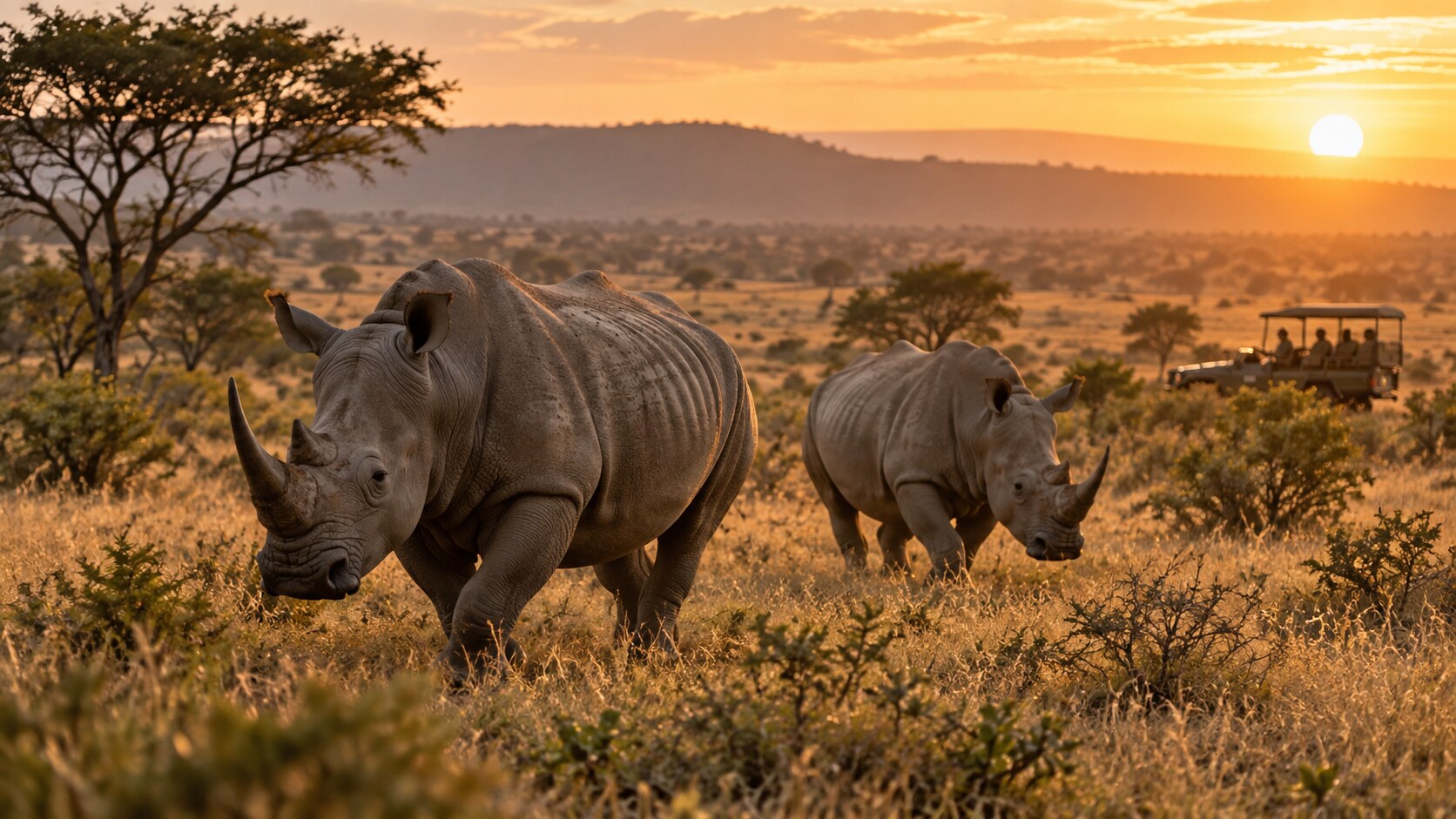
Why wildlife DNA evidence matters
Poaching investigations often unfold across remote terrain where witnesses are scarce and suspects may flee before rangers arrive. Physical evidence can connect a person, animal and location in ways that testimony alone cannot. In this case, the blood on a shirt supported the link between Sibuyi and three individual rhinos found dead nearby.
The sentence cannot restore the animals that were killed, and the two reported accomplices were still at large when SANParks announced the result. But the case shows that wildlife crime can be investigated as serious organized criminal activity rather than treated as an unavoidable cost of conservation.
Rhino horns are targeted for illegal trade even though they are made primarily of keratin and have no scientifically established medicinal benefit. Demand continues to place rhinos, rangers and protected ecosystems under pressure. Effective enforcement therefore depends not only on patrols, but also on secure evidence collection, forensic laboratories, prosecutors and courts able to carry a case through to judgment.
Three rhinos lost their lives in this crime. The 30-year sentence stands as accountability for those killings—and as a reminder that a trace of biological evidence can help speak for animals that cannot testify for themselves.
Sources
- South African National Parks: Poacher sentenced to thirty years behind bars
- Lowvelder/Caxton Network News: Kruger National Park poacher sentenced to 30 years
- IOL: Rhino poacher handed 30 years for killing three rhinos
